The security situation in the country is becoming worrisome as various stakeholders proffer solutions
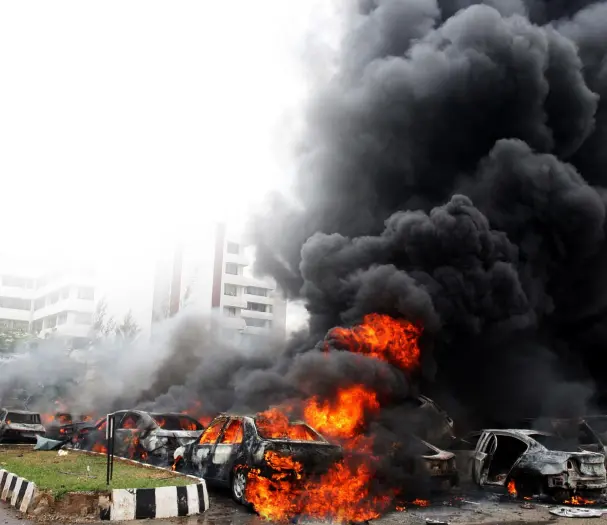
Nigeria could be described as a country under siege today. Apart from the Boko Haram insurgency which for the past 10
years have been taking its toll on the nation, especially in the northeast, violent crimes like kidnapping, banditry,
robbery have also affected economic and social activities in Africa’s largest nation.
But the National Assembly is not allowing the situation to lie low. Uncomfortable with the current deteriorating
security situation in the country, the nation’s Senate and the House of Representatives, at separate sittings,
unanimously called on President Muhammadu Buhari to sack the nation’s Service Chiefs. In the alternative, the National
Assembly (NASS) asked them to immediately resign for being “unable to address the security challenges plaguing the
country since 2015.’’
To put out the raging fire of killings, armed banditry and kidnappings, among others, the Senators called on President
Buhari, as a matter of urgency, to sack the Service Chiefs, who were appointed in July 2015, contending that they have
done their part and at the moment, are out of ideas and have also overstayed their welcome.
The House, in a resolution, said the Service Chiefs have not been able to address the security challenges plaguing the
country since 2015 when they were appointed by the President.
The lower chamber regretted that the security top brass had adopted ineffective strategies that had failed to yield
positive results. A motion by the Chief Whip of the House, Mohammed Monguno (APC, Borno), and 14 others, asked President
Buhari to remove the Service Chiefs if they failed to resign their positions. Monguno, who expressed concern over the
incessant blood-letting from attacks by Boko Haram and the Islamic State West African Province, ISWAP, insurgents in the
North-East, recalled that activities of the insurgents were drastically reduced earlier in Borno and Yobe States, before
the latest resurgence of attacks on communities.
“Recently, the insurgents have forced the Nigerian Military to close traffic on the Damaturu-Maiduguri Road for some
days. The Damaturu-Maiduguri Road is the only access road from Maiduguri to other parts of Nigeria” he said.
Similarly, Speaker of the House of Representatives, Femi Gbajabiamila, described Amotekun, a South-West regional
security initiative and similar regional outfits, as solutions to the raging problem of insecurity in the country. He
said: “Recently, the Governors of Lagos, Ogun, Osun, Ekiti, Oyo and Ondo states, took action to implement a regional
security network to support the efforts of the Nigeria Police Force in preventing crime and protecting the lives and
properties of the citizens who live, work and travel through these states. According to the Speaker, Amotekun and other
such state or zonal interventions that already exist in other parts of the country, are a desperate response to the vile
manifestations of insecurity that trouble the lives of citizens, depriving them of the peace and security that gives
life meaning.
He also lamented the killing of Pastor Lawan Andimi and a student of Plateau origin, by Boko Haram terrorists.
Gbajabiamila stressed: “Our cup of endurance has run out and we are no longer willing to labour under these dark clouds
of random violence inflicted upon our people by faceless cowards whose ends we do not understand, and whose means we do
not know.
“Overcoming this overwhelming national security challenges now requires our concerted efforts and willingness to accept
new approaches and consider novel ideas.” He added: “Neither the security institutions nor political leaders can afford
to hold on too tightly to a status quo whose frustrating limitations are painfully evident, whilst reflexively rejecting
innovations that may improve our fortunes if properly implemented.”
The Chairman of the House Committee on Defence, Mr Jimi Benson (APC Lagos), also expressed concern over recent
developments in the country. He said: “The National Security Adviser is from the North East and cannot get to his
village. The Chief of Army Staff is also from the North East and cannot get to his village. The Chief of Air staff too.
That speaks volumes of their “ability’’. “But the solution lies in the hands of the President. I don’t know why he has
kept them since 2015 when they were first appointed. He should decide whether to continue to keep them or not. I believe
the resolution here will prick his conscience.”
The Senate also set up a 17-member ad-hoc Committee with the Senate Leader, Senator Abdullahi Yahaya (APC, Kebbi North),
as chairman, saddled with the responsibility of engaging the security agencies and reporting back to the Senate within
two weeks. The committee will also engage the National Security Adviser, Major-General Mohammed Monguno on the
implementation modalities of the December 2019 national security strategies, and the National Security Institute to
discuss their operational structures, funding, equipment and staff disposition with a view to reviewing the national
security architecture.
The Service Chiefs whose jobs are on the line are the Chief of Defence Staff, General Abayomi Olonisakin; National
Security Adviser, NSA, Major-General Monguno; Chief of Army Staff, Lt. General Tukur Buratai; Chief of Air Staff, Air
Marshal Sadique Abubakar and Chief of Naval Staff, Vice Marshal Ibok- Ete Ibas.
As far as security volatility of the country is concerned, the Northern region of the Federal Republic of Nigeria, made
up of three geo-political zones, (North West, North Central and North East) has sadly become a security nuisance to the
nation. This part of the country with enormous natural and human resources to make Nigeria actualize its potentials,
instead records virtually on daily basis, reports of insurgency, kidnapping, banditry, robbery; herders/farmers’
clashes, and other violent crimes in disturbing dimensions.
Apart from the Boko Haram insurgency which has devastated the North East region, grinding economic and other activities
to a halt with incalculable loss of lives and properties, as well as devastation of the region, there are emerging
warlords that are making the area killers’ field. For the past few years, the herders/farmers clashes, which ravaged the
Middle Belt region in particular equally brought untold hardships to the people of the region. Many lives were not only
lost, but farms and crops worth billions of naira were equally destroyed. Of course the nation is today experiencing
food security challenge as a result of the crises.
In the North Central, the new year started with reports of bandits attacking Mangu Local Government Area (LGA) of
Plateau state, killing no fewer than 12 persons.
Plateau State which had enjoyed relative peace for quite some time had a breach of it when a group of armed men attacked
Kunben village in Kombun District of Mangu LGA of the state, killing no fewer than 12 persons early in the new year.
Mangu LGA had been grappling with security challenges since the last quarter of 2019, recording the death of a district
head in the area. Police spokesman, Mathias Tyopev who confirmed the incident explained that the attack left some
villagers with various degrees of injury. The attackers, armed with sophisticated weapons and numbering about 20,
invaded neighbouring Pankshin Council Area and rustled several cows. They were resisted by the youths in the area who
reportedly killed a number of the rustlers. Within the same week came another disturbing report of escalation of tension
in Kwatas and surrounding communities of Bokkos local government area of Plateau state, following the killing of some
members of Kwatas community by gunmen.
The recent killing in Kwatas, according to reports, is linked to the one which occurred earlier at Kulben community in
Mangu local government area of the State some weeks ago. Reports from the area indicated that the Kulben issue has
criminal undertone, involving cattle theft. An account of the incident had it that seven suspects were arrested at the
Kulben attack and sources reported that some vigilante men in Kwatas village assisted in apprehending the suspects hence
the return of the gunmen to attack the community in retaliation. Reports equally have it that Fulani settlements were
attacked and a worship centre in the area razed as residents reacted to the recent killings in the area.
The State Command Police Public Relations Officer, ASP Gabriel Uba was quoted: “On the 26/01/2020 at about 2030 hrs, the
Plateau State Command received an information that at about 1930hrs, unknown gun men suspected to be herdsmen, attacked
Kwatas village Bokkos district, Bokkos LGA of Plateau State where 13 persons lost their lives while five persons were
critically injured and receiving treatment at the General Hospital.”
Governor Lalong in a statement by his Director of Press and Public Affairs, Makut Macham while commiserating with
victims and families of those killed described the attack as “yet another attempt by criminals who do not mean well for
the State to take it back to the dark days of insecurity that had been substantially overcomed.” The Governor, directed
security agencies to go after the perpetrators of the heinous crime and ensure their arrest and prosecution as the state
will no longer tolerate the wanton loss of lives, stressing, “My heart again bleeds by this tragedy as lives of innocent
citizens are cut short for no reason.”
From Kogi state, the Kogi LG community was subjected to a heinous attack resulting in the death of no fewer than 20
persons in Tawari burning buildings, including the palace of the king of the community. Public Relations Officer of the
Kogi State Police Command, Mr Williams Anya, confirmed the development adding that a police assessment team had visited
the community and that many buildings, including places of worship were burnt. Tawari community is a few kilometres off
Gegu town along the Lokoja-Abuja highway. A resident of Tawari community, Mrs Comfort Solomon, who survived the attack,
told NAN that the gunmen, numbering about 100 invaded the community unhindered, killing19 persons and burning houses.
She said the gunmen came in their numbers on the fateful day on motorcycles and descended on the village, killing and
burning buildings until the early hours of the day.
The witness said that many places of worship, including the palace of the Akuma of Tawari were burnt by the invaders.
The invaders reportedly entered selected houses, packed foodstuffs and motorcycles and burnt selected houses, including
homes of clerics. From Kogi state to Niger state. Early in the week, bandits have been carrying onslaught in four local
government areas of the state, precisely Niger East Senatorial District, at the early hours of penultimate Saturday
killed eleven persons. The hoodlums reportedly also rustled over 300 cattle in the raids. Reports have it that the
hoodlums invaded the communities at dawn and ransacked the entire communities, as they, without hindrance, moved from
house to house for hours.
It is sad, most unfortunate that the villagers were helplessly left to their fate and at the mercy of the invaders. Help
did not come their way as the marauders held them hostage mercilessly.
The Senator representing Niger East, whose constituency was under siege, Alhaji Sani Musa recounted the incident
pathetically: “As the attacks continued, more villagers in my constituency are awaiting their fate as no sign of succour
comes their way. It is confirmed that the bandits attacked my people all through the night to the afternoon, and most
communities are in grave danger.”
In a recent television programme monitored by Supremacy Magazine, the Senator representing Borno South senatorial
district and the Chairman, Senate Committee on Army, Senator Ali Ndume stated that it was now time for the President to
address the security issues decisively and take definite action. According to him, Nigeria is already in a state of war
and the nation’s security challenge has gone beyond Boko Haram.
He further stated that, “if I were the President, I will call the Service Chiefs and tell them that they have heard and
seen what is going on, that Nigerians are not happy because the situation is getting bad, what do you need and when are
you going to get this business done? The President is a military man, experienced, and he gets information from sources.
He should be able to make up his mind and take decision on this, he said.
Though the country appears to be fast drifting into a state of anarchy, the trend can still be remedied with serious
committed, proactive, sincere and sustained measures by the government and all the stakeholders including the
international community. This can be actualized through social justice, job creation and even development.
A Nation Under Siege
Related Articles


Comments (2)
Really this situation described shows how deeply complex Nigeria’s security challenges have become—it's no longer just about one threat but multiple overlapping crises, which makes quick solutions very difficult.
I feel the pressure from the National Assembly reflects growing public frustration, and it highlights the need for fresh strategies rather than relying on the same approaches that haven’t fully worked.