The President used the opportunity of the Democracy Day to highlight on some of the achievements and programmes of his
administration as the country battles the Covid-19 pandemic
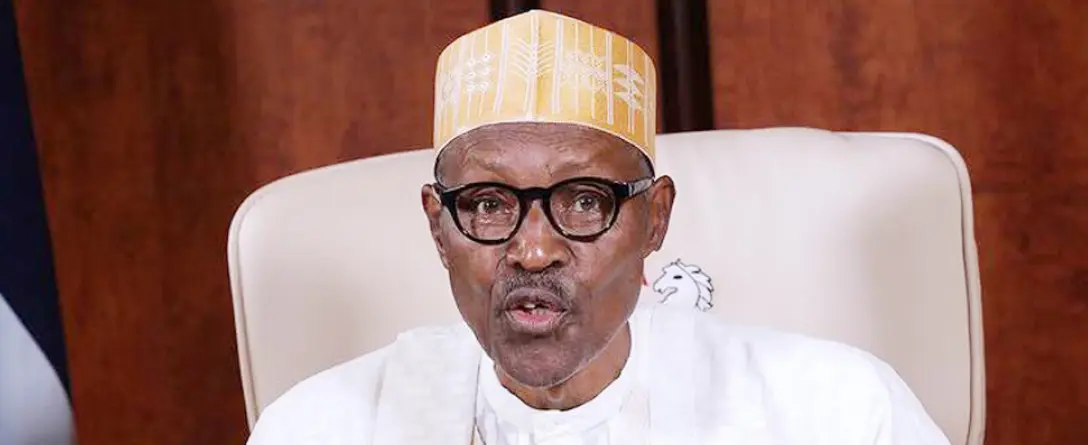
President Muhammadu Buhari used the occasion of Democracy Day to address a number of challenges facing the nation. And
they are many, ranging from economic to political. Buhari had in 2018 declared June 12 as Nigeria’s Democracy Day, in
place of May 29, the anniversary of the inauguration of the Fourth Republic, which since 2000 had been marked as
Nigeria’s Democracy Day.
In his broadcast, the president outlined several key areas his government has scored a high point. According to him,
despite the various challenges, including the COVID-19 pandemic which has rendered million Nigerians jobless, the
President said as part of the strategy to create jobs in reducing the effect of COVID-19 on the youths, he directed the
employment of 774, 000 Nigerians. “These youths will be engaged in Special Public Works Programme aimed at cushioning
the effects of economic downturn. According to him, “Each of the 774 local government areas in the country will be
allotted 1,000 slots. I am pleased to report that this programme has commenced,” he added.
On the economy, the president said since exiting recession, the economy has witnessed eleven quarters of consecutive GDP
growth with the GDP growing from 1.91% in 2018 to 2.27% in 2019. He, however, noted that the GDP has declined to 1.87%
in the first quarter of 2020 as a result of the decline in global economic activities due to the COVID-19 pandemic.
“Every single economy in the world has suffered a decline adding, “Ours has been relatively moderate,” he said. He said
the external reserves grew from $33.42 billion on April 29th 2020 to about $36.00 billion in May, 2020 “which is enough
to finance seven months of import commitments.”
On the rampaging COVID-19, President Buhari said our aspirations, humanity and indeed democracy is under the threat of
the pandemic. He, however, added that Nigeria has survived many crises before and came out stronger. He declared: “I am
confident that by God’s grace we shall overcome this one and emerge stronger and more purposeful.” On agriculture, the
president maintains, remains the key to his administration’s economic diversification strategy stressing,
“The Presidential Fertilizer Initiative programme continues to deliver significant quantities of affordable and
high-quality fertilizers to our farmers. This initiative he maintained has also revived 31 blending plants and created a
significant number of direct and indirect jobs across the value chain. He said the government is also revamping the
cotton, textile and garment sector via a CBN Textile Revival Intervention Fund that would considerably reduce foreign
exchange spent on cotton and other textile imports.
For food security, he said, “we are promoting “Grow What We Eat” and “Eat What We Grow”, adding that the government will
continue to support the Agriculture sector through the CBN Anchor Borrowers Programme and similar schemes.”
To protect our farming investments, he said the Federal Government has deployed 5,000 Agro-Rangers and employed 30, 289
in our para-military agencies. “Our efforts on growing non-oil exports have started to yield some results. “For
instance, in the past year, our revenue from Cocoa and Sesame Seed increased by $79.4 million and $153 million,” he
said.
0n power the president outlined some of the projects the administration is executing in this regard to include Alaoji to
Onitsha, Delta Power Station to Benin and Kaduna to Kano; 330kv DC 62km line between Birnin Kebbi and Kamba; Lagos/Ogun
Transmission Infrastructure Project; Abuja Transmission Ring Scheme; and Northern Corridor Transmission Project. He
added that the agreement with Siemens will also transmit and distribute a total of 11,000 Megawatts by 2023.
On transportation, President Buhari noted that through the SUKUK-Funded Road Projects, a total of 412 km of the targeted
643 km road projects have been completed, representing 64%. “On the 2nd Niger Bridge, piling work has been completed and
the approach roads are being constructed. 48% of work on this bridge has been achieved. “We have constructed 102km of
the 376km Abuja – Kaduna – Kano Road, representing 38%, and the 42.9km Obajana – Kabba Road is 87.03% complete.
He also revealed that the Federal Roads Maintenance Agency has completed routine maintenance on over 4,000km of federal
roads out of the 5,000km targeted.
On railway networks, the president said more locomotives, coaches and wagons are being introduced for the Abuja-Kaduna
Rail Line. “The Central Ajaokuta – Itakpe – Warri Line has been completed and is being extended from Itakpe to Abuja on
one end and from Warri Town to Warri Port on the other. “The Lagos-Ibadan Rail Line is 90% completed and would be
extended to the Lagos Port which would help address the long-standing grid-lock at the Apapa port. “The Kano – Maradi
Single Track Standard Gauge Railway, Coastal Railway Project and Port Harcourt – Maiduguri Standard Gauge Railway, with
its associated branch lines running through the South Eastern and Gombe States, industrial park and Bonny Deep Sea Port
are all ready for concessioning,” he added.
On education, he said his administration is pursuing the enforcement of free and compulsory basic education for the
first 9 years of schooling. “In pursuit of this, we have launched the Better Education Service Delivery for All in 17
states, established additional 6 Federal Science and Technical Colleges and currently executing a pro-active Teacher
Training Plan with all states of the Federation,” he said.
On Digital Economy President Buhari said digital economy continues to play an important role in our development agenda
as his administration moves into the age of Artificial Intelligence. He said: “Since the creation of the Ministry of
Communication and Digital Economy, the National Digital Economy Policy and Strategy has been launched.
According to him: “Steps have been taken to achieve a reduction of connectivity cluster gaps from 207 to 114 as well as
increase the level of 4G coverage by 30%.”
On Housing, he said 1,200 housing units have been delivered for the low and middle-income earners, as well as the
provision of 520 service plots with infrastructure through a Public Private Sector partnership and the issuance of 868
mortgages totaling N7.7 Billion. “Similarly, Home Renovation Loans totaling N16.2 Billion have been granted to 19,210
people,” he added.
On security, the President explained that with the situation in the country, he regrets recent sporadic incidents with
tragic loss of lives in Katsina and Borno States as a result of criminals taking advantage of COVID-19 restrictions. He
added that Security Agencies will pursue the perpetrators and bring them to swift justice.” President Buhari also said
all the Local Governments that were taken over by the Boko Haram insurgents in Borno, Yobe and Adamawa have long been
recovered and are now occupied by indigenes of these areas who were hitherto forced to seek a living in areas far from
their ancestral homes.
“The total collapse of the economies of these areas, which constituted a threat to our food security, has also been
reversed with the gradual recovery of farming and other economic activities.” “As part of the strengthening of our
internal security architecture, the Ministry of Police Affairs was created,” he added.
He said he has directed “all relevant Government agencies to pay special attention to the peculiarities of persons with
disabilities in the formulation and implementation of their policies and programmes, and where suitable their
employment.” “Nigerian women remain a particular treasure to this nation and for this reason this Administration has
continued to give them a place of pride in the affairs of our country,” he added.
In all, June 12 is a special day in the annals of the history of the Federal Republic of Nigeria. It is a day set aside
by the Federal Government, precisely the administration of President Muhammadu Buhari two years ago to celebrate the
nation’s attainment of restoration of democracy 21 years ago.
The present All Progressives Congress (APC) - led administration in 2018 jettisoned the May 29 which was the traditional
day for observing the country’s return to civil rule for the day that was usually observed especially by states in the
South West region of the country in honour of the anniversary of the winner of the June 12, 1993 Presidential election,
Alhaji Moshood Abiola.
This year’s Democracy Day is being observed at a time the nation is facing a number of challenges: COVID-19 pandemic
which is ravaging the globe and has had spiral effects on the nation’s economy, security, food and jobs.
It is understandable why the Federal Government in declaring the day to be observed as public holiday, the Permanent
Secretary in the Ministry of Interior, Georgina Ehuriah, in a statement issued in Abuja said the declaration which was
made by the Minister of Interior, Ogbeni Rauf Aregbesola was in appreciation of the journey made so far on democracy.
While congratulating Nigerians at home and abroad for the entrenchment of democratic rule in the country the Minister
equally commended the heroes of our democracy for their dogged determination and sacrifice which eventually birthed
democratic governance in Nigeria.
“Ogbeni Aregbesola called on all Nigerians to continue to cherish these selfless efforts and collaborate with the
President Muhammadu Buhari-led Administration to ensure the realization of the democratic ideals which these Patriots
fought for, even at the cost of their lives.
“The Minister, who reassured Nigerians of the Federal Government’s commitment to battling the scourge of COVID-19 with
the cooperation of all Nigerians, advised them further, to take responsibility for stopping the spread of the virus” the
statement noted.
Nigeria’s 21 Years of Democratic Governance
Comments (2)
Nigeria should be serious with her citizens
Same old story!!