Interview:
Nigeria, Trinidad & Tobago enjoy robust relationship
–High Commissioner,
De Landro
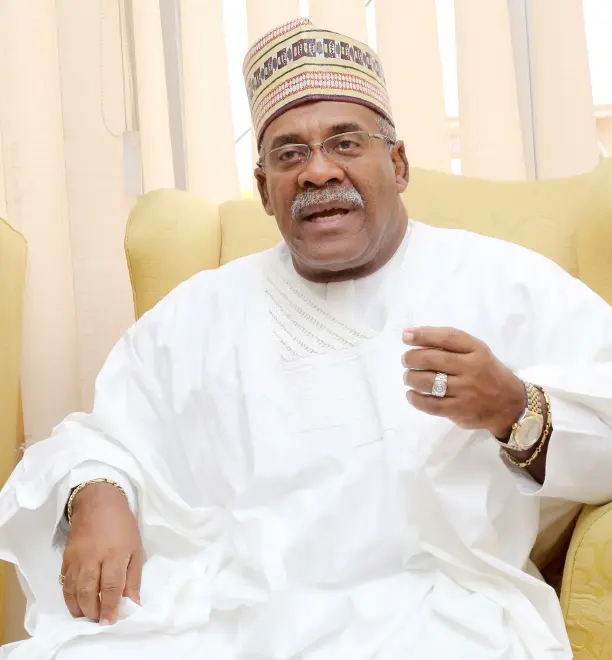
In an interview session with Supremacy Magazine Editors, led by the Publisher, Princess Abigail Amalaha, Trinidad and
Tobago High Commissioner to Nigeria, His Excellency Wendell V.C. De Landro expresses delight over the robust
relationship between his country and Nigeria, while expressing hope of further improvement.
Your Excellency, can we have an insight into your diplomatic duty as the Trinidad and Tobago High Commissioner in
Nigeria?
As the Trinidad and Tobago High Commissioner to Nigeria my tour of duty commenced on April 19, 2018 and I presented my
Letters of Credence to H. E. President Muhammadu Buhari on the 13th of September 2018. I am therefore just one year in
my official capacity. I must also add that I had the pleasure of working and living in Nigeria (Port Harcourt) prior,
during the period 2006 -2010 when I worked for Shell International. I mentioned this only to make the point that Nigeria
is not a new experience for me. What is new is the official position I am now honoured to serve in. First of all, the
staff at the Mission have been very supportive and they have made my resettlement in Abuja smooth and seamless for which
I am truly grateful. The Diplomatic Community has been equally welcoming and generous with their time in receiving me.
As a Chemical/Petroleum engineer by profession, and the fact that energy is a priority for both our countries, it has
been one of my priorities since arriving in Abuja. The Nigerian Gas Association (NGA) has been particularly welcoming in
affording me the opportunity to attend lectures in Lagos and most recently address that body at its recent (Abuja)
International Gas Conference, held from 14th-16th October 2018. I look forward to engaging more fruitfully with the
Nigerian Ministry of Foreign Affairs as we seek to deepen our bilateral engagement.
Would you say you have achieved some of your key diplomatic objectives in Nigeria to date?
In responding to such a question, I must firstly acknowledge the tremendous work and effort already expended by my
predecessors in forging and maintaining the very cordial relations that have existed and continue to exist between our
two countries over the last 46 years since Trinidad and Tobago first had a physical presence in this country. Moving
forward, I have been handed the baton in full flight and am prepared to continue that long tradition of service in the
name of the Government and people of Trinidad and Tobago. With regard to my own objectives, I would say that the arc of
my tenure as High Commissioner has only just begun, but I am heartened by the existing foundation that has been laid and
the fact that as sovereign countries we share a common ancestral tree that will bind us forever. I am in my brothers’
house, so to speak. I also am aware that while bureaucracies within which we are called to operate have their own
procedures and consequent time lines, I am indeed hopeful that our mutual interests are sustained.
During the presentation of his letter of credence last year, the Nigerian High Commissioner-designate to Trinidad and
Tobago, Alhaji Jika Ardo Hassan, was assured by Hon. Dennis Moses your Minister of Foreign Affairs that the existing
bilateral relationship between the two countries would be strengthened. Can you give us an idea of the level of
improvement since then?
Well, your question requires an answer from two perspectives, from the Nigerian High Commissioner to Trinidad and Tobago
to whom such a statement was initially made and from me. Since I would not presume to speak on behalf of my counterpart
in Trinidad and Tobago I will briefly point to Trinidad and Tobago’s own efforts. For example, prior to my arrival in
April 2018, the High Commission was without a substantive High Commissioner for two and a half years. As you might be
aware too, the Nigerian High Commission in Trinidad and Tobago was also without a substantive Head of Mission for a
correspondingly long period as well. In both instances, such developments are indeed concrete and positive developments
which have since occurred. Following that time Trinidad and Tobago received a contingent of 23 officers from the
Nigerian National Defence College during the period 19th-26th May 2018 who were part of a World Study Tour with college
credits awarded for participation. The delegation visited the length and breadth of the country and visited all
institutions relative to their specific areas of interest. In the area of culture, the Mission had sponsored a booth at
the 11th Edition of the International Arts and Crafts (INAC) Expo during the period 17th-24th November 2018 and its
efforts at promoting Trinidad and Tobago’s Carnival and national instrument - the steelpan - garnered the Mission 1st
Position in the Best Participating Country Category. Other high level official visits are also being planned for 2019.
Against that background, I am satisfied at this point that the Mission is playing its part in strengthening those long
standing bilateral bonds. Other than the areas of energy and defence, I am of the view that opportunities also exist in
the creative industry, education, tourism, food and beverage sectors.
What is the bilateral trade status between Trinidad and Tobago and Nigeria and how can it be enhanced?
Trinidad and Tobago experienced a favourable balance of trade with Nigeria for many years up to the end of 2016.
Thereafter, there was a sharp decline in exports to Nigeria with a marked increase in imports. I have been told that
present exports to Nigeria include liquefied butane, tower cranes and machinery parts. Previously, exports have included
jet fuel, gas, oils, and Angostura Aromatic Bitters in large quantities, but these exports have declined in some
instances.
I believe our trading relations can be enhanced tremendously by revisiting that which has served us well in the past.
Listening to the needs of the people and building from the bottom up. At the people level, greater attention must be
paid in respecting and celebrating those aspects which we share in common and let such guide us in forging our bilateral
relations e.g. in the areas of music, sports, fashion, native cuisines, at the political level our membership in the
Commonwealth of Nations, and our shared respect for democratic norms and traditions just to name a few. They must be
seen as strengths, and allocating much needed resources and efforts into further advancing these relations are the
building blocks needed to develop the relationship further. Through such an approach, when we eventually meet at the
top, we meet with purpose and clarity, aware of the shared goals and objectives to be attained. For example, having in
place a signed Bilateral Services Agreement (BASA) that will more easily facilitate travel between our two countries and
regions has long been a recognised and expressed need by all concerned yet it remains elusive. But what I offer here is
but one such approach, recognising that at the same time there may be many roads to pursue in realising the same
objective. I am therefore always available and open to receiving new ideas on how we can better cooperate and serve the
needs of our peoples.
How has CARICOM helped in advancing the bilateral relationship between the Caribbean nations and Africans?
One must bear in mind that 20 countries comprise the Caribbean Community (CARICOM) of which 15 are full members and five
are Associate Members with the Secretariat located in the member state of Georgetown, Guyana. As a body, CARICOM has
been a unifying, developmental force in the region of which we are proud and committed members much akin to your own
Economic Community of West African States (ECOWAS). The Caribbean and Africa have longstanding relations within the
African Caribbean and Pacific (ACP) Group of Countries forum which was formed in 1975. Through the ACP, officials at all
levels have worked towards a coordinated position on achieving sustainable development in member states in respective
countries and negotiating with the European Union as well as solidarity among our peoples. Furthermore, officials from
the CARICOM Secretariat and the African Union met last year to discuss, among other things, formalisation of an
institutional relationship between the two organsiations. We in the Caribbean are keenly aware that the African Union
sees the African Diaspora as a key player in the development of the continent, and Trinidad and Tobago and CARICOM are
part of that Diaspora.
May you give us insights of how many Nigerians are resident in Trinidad and Tobago and their challenges, if any?
Unfortunately, I do not have those national statistics at hand but what I can say is that on average, for the last three
years, the Immigration Division in Port of Spain has approved approximately 300 Nigerian single entry visas annually to
Trinidad and Tobago. So for a small country, we do see our fair share of Nigerian visitors. As regards Nigerian migrants
to Trinidad and Tobago, some Nigerians, particularly the young professionals, have secured employment, while others,
inclusive of some medical doctors and university lecturers, whom I have personally met, have married and remained as
citizens and contributed positively to the development of the country of which we are all proud.
Cultural interaction plays a major role in bilateral relations. What role has your country’s rich cultural heritage
played in the Trinidad and Tobago-Nigeria partnership?
Culture is indeed an important and an escapable pillar of all societies, it is the unifying force that not only unites a
people; it serves also to identify them. Culture is also a bridge to other societies as it transcends barriers, builds
friendships, facilitates dialogue and opens the door to shared experiences. I like to think of Trinidad and
Tobago/Nigeria relationship as being on a path that still has a long way to go in fully realizing the true potential of
that cultural partnership. But the initial signs are indeed encouraging. For example, I have been told that Trinidad and
Tobago’s Carnival has been the prototype and inspiration for the Cross River state annual Calabar Carnival. We are
indeed very proud of the role our small nation’s premier cultural celebration has played in the growth and development
of that state’s annual Carnival production.
I have also been told by my colleagues and fellow nationals how surprising and particularly gratifying it has been to
hear the music of Trinidad and Tobago and those of the other Caribbean Islands being played at functions at the Nigerian
Foreign Ministry and at other diplomatic receptions in and around Abuja. Music is indeed universal in its appeal and
given the available technology of today, the globalization of music and musical appreciation from all corners of the
globe is already fully in train. Therefore, it goes without saying that another area of attention that I will be
focusing on during the period of my tenure will be in the further promotion of Trinidad and Tobago’s culture and the
associated creative industries.
Can you share with us the cultural/religious similarities between your country and Nigeria? More so, that Shango and
Orisha traditional religions derived from the Yoruba culture of Nigeria is also being practiced in your country?
Trinidad and Tobago is an ethnically diverse, melting pot of peoples drawn from all corners of the world, all of whom
have settled in the country and contributed to its overall development with culture and religion being no exception. In
2004, Archbishop Desmond Tutu famously described Trinidad and Tobago as “the rainbow nation,” referencing of course the
racial diversity and mixtures of peoples he witnessed while on his visit to Trinidad and Tobago. It is therefore not
surprising that our country’s political and historical antecedents drawn primarily from its colonial past, eventually
brought into being a nation of peoples whose ancestors in part can be traced majorly back to the African continent and
in particular to Ghana and Nigeria all of whom today constitute approximately 50% of our population.
There is no question that Trinidad and Tobago is a multi-religious nation too. According to the 2011 Census, the largest
religious groups in the country are the Protestant Christians (33.4%), Roman Catholics (21.5%), Hindus (18.1%) and
Muslims (5%). Existing alongside, these “traditional” faiths are the two Afro-Caribbean syncretic faiths, the Shouter or
Spiritual Baptists constituting 5.7% and the Orisha faith (formerly called Shangos) constituting 0.1% and which are also
said to be among the two fastest growing religious groups in the country. It is noteworthy to mention also that in
January 1996, the Government of Trinidad and Tobago declared March 30th a national holiday and such is referred to as
Spiritual Baptist (Shouter) Liberation Day. In addition to which my country is proud to claim, that it was the first
country in the world to declare Emancipation Day a public holiday in 1985. This observance is spearheaded by the
Emancipation Support Committee of Trinidad and Tobago and is celebrated every 1st August to commemorate the day in 1834
when chattel slavery was officially abolished. Our connection therefore to the African continent, its peoples, and its
history is strong and enduring. That recognition of a shared history and common ancestry is the backdrop of our presence
here in Nigeria and the continent as a whole.
If you were not a diplomat, which other profession would you have chosen?
I am always a bit wary of engaging in speculation. Suffice it to say, I am a trained and certified Chemical Engineer
with a minor in Petroleum Engineering, having worked as a Petroleum Engineer for most of my previous career/life.
Which is your favourite Nigerian dish or delicacies?
Easy,…Nkwobi and Banga Soup. It brings to mind the flavours of the Trinidad and Tobago cuisine.


Comments (2)
From my perspective, this interview shows how much potential exists between Trinidad and Tobago and Nigeria, especially in areas like culture, energy, and education. I like how the High Commissioner emphasizes building relationships from the ground up, including people-to-people connections like music, food, and shared traditions. However, I also think the discussion leans heavily on possibilities and goodwill, without deeply addressing the practical barriers that can affect implementation of these diplomatic goals.
I see this interview as a strong reflection of how diplomacy is built on both experience and shared interests. The High Commissioner’s background in Nigeria makes his perspective feel more grounded, especially when he talks about energy, education, and trade opportunities. I also find the focus on cultural ties and shared African heritage important because it shows how relationships between countries go beyond politics. At the same time, I feel the article is very optimistic and doesn’t fully address the real challenges that often slow down trade and cooperation.